CONFIRMED
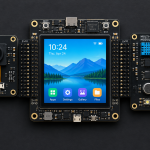
Espressif Systems has announced ESP-Mosaico, describing it as a modular development platform for AI-assisted hardware creation built around its new ESP32-S31. Espressif says the development kit is available for purchase now. CNX Software reports that the complete kit with camera and interaction module sells for $59 in the Mosaico store.
What we know
The heart of the board is the ESP32-S31. According to Espressif’s press releases and product page, it has a dual-core 32-bit RISC-V CPU running at up to 320 MHz, 60 GPIOs and 512 KB of SRAM. Espressif announced the chip on Mar 26, 2026 and said on Jul 27, 2026 that it had entered mass production.
Espressif’s ESP-Mosaico V1.2 user guide lists 2.4 GHz Wi-Fi 6 (802.11b/g/n/ax), Bluetooth 5.4 (LE + BR/EDR) and IEEE 802.15.4 for Thread and Zigbee. Memory is generous for a microcontroller board: 16 MB of in-package PSRAM, 16 MB of SPI NOR flash and 1 Gbit of SPI NAND flash.
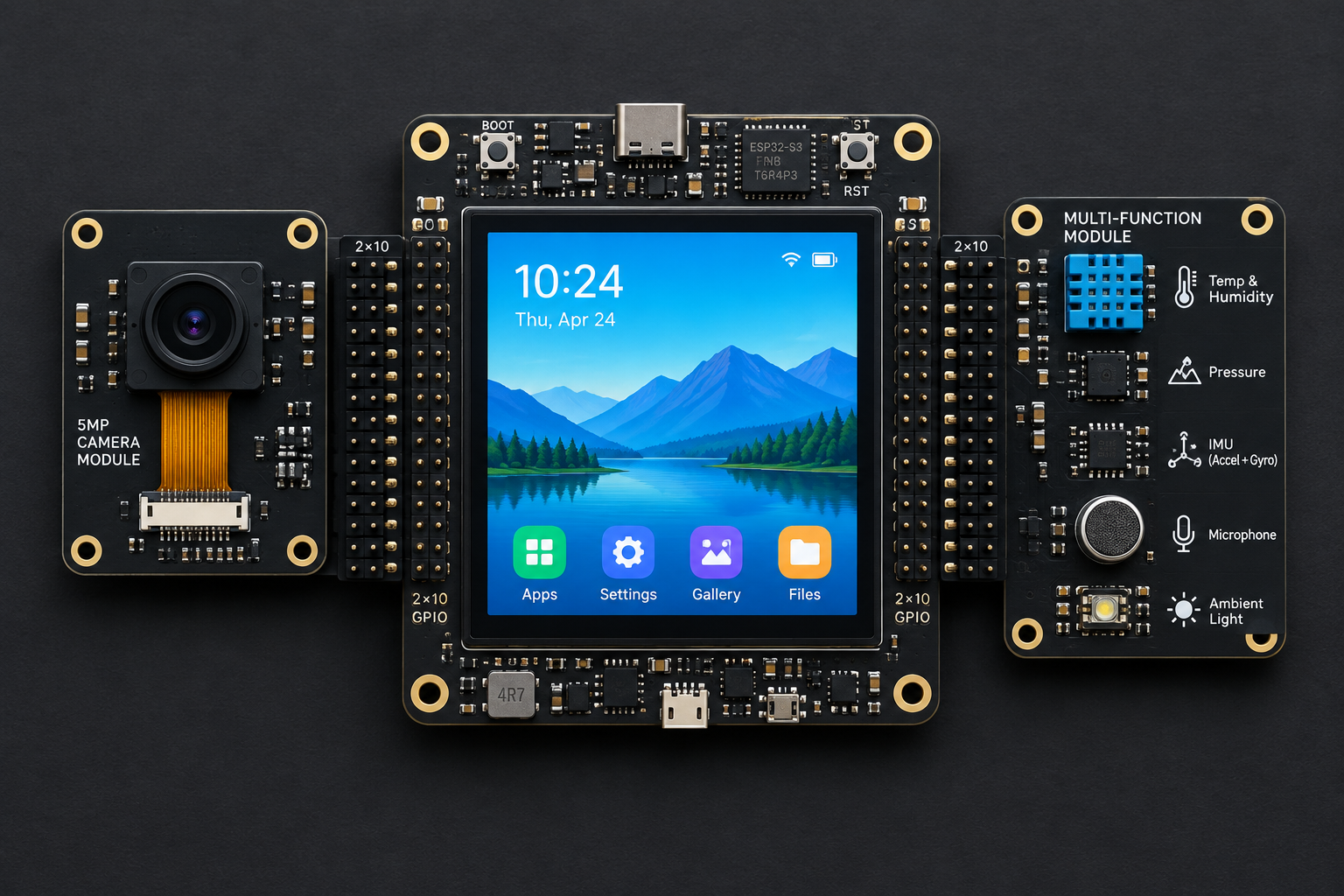
The same guide lists a 480 × 480 QSPI square touch display, an ES8311 audio codec, an NS4150B amplifier, a BMI270 6-axis IMU and dual BMM150 magnetometers. Module headers sit on the left and right as 2 × 10P connectors at 2.54 mm pitch. Espressif’s official ESP-Mosaico GitHub organization adds a microphone, a vibration motor, a BQ27220 fuel gauge, USB OTG and describes the side slots as hot-pluggable.
Espressif’s documentation notes two CoreBoard versions, V1.2 and V1.0, which you can tell apart by the silkscreen. Espressif also provides a board support package covering the LCD, touch, audio, sensors, battery, NAND flash, module resources and USB console.
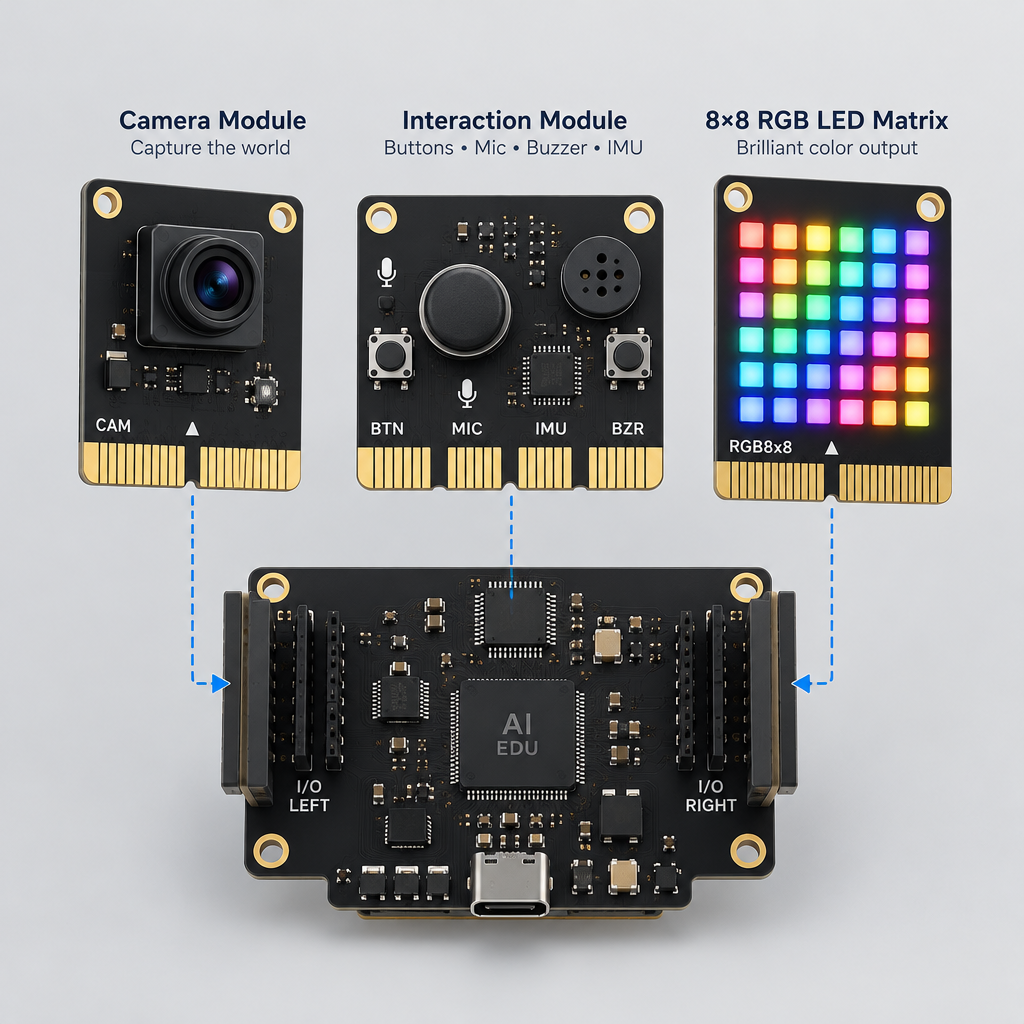
On modules, Espressif says the hardware covers cameras, sensors, buttons, lighting and motors, and that supported modules are automatically identified and integrated by the system. CNX Software reports two expansion modules so far: a camera module and a Multi-function Interaction Module. Espressif’s Mosaico site also lists an 8×8 full-color RGB matrix light module that plugs into either side of the main board.
The software pitch has two tracks. Espressif says Chat Coding starts from a natural-language request and needs no local development environment, while Vibe Coding brings AI agents into implementation, deployment, testing on physical hardware and iteration. The platform runs on Espressif’s ESP ZeroCode AI platform with full board and peripheral simulation, and Espressif says it is designed to bring other coding agents into the build-test-debug loop.
What we don’t know yet
The display panel type is unclear. CNX Software calls it a 480 × 480 OLED, but Espressif’s documentation says only “480 × 480 QSPI square touch display” without naming the technology. Adding to the confusion, inspiration text on the official Mosaico site mentions a “round screen”, which conflicts with the square display in the docs.
The $59 figure comes from CNX Software’s report. We have not seen a price in Espressif’s own announcement, so treat the Mosaico store listing as the final word.
The ESP32-S31 announcement includes Ethernet, but the board documentation we reviewed does not list an Ethernet port. Espressif has also not detailed how automatic module identification works on the headers, or what changed between the V1.0 and V1.2 CoreBoards.
What it means
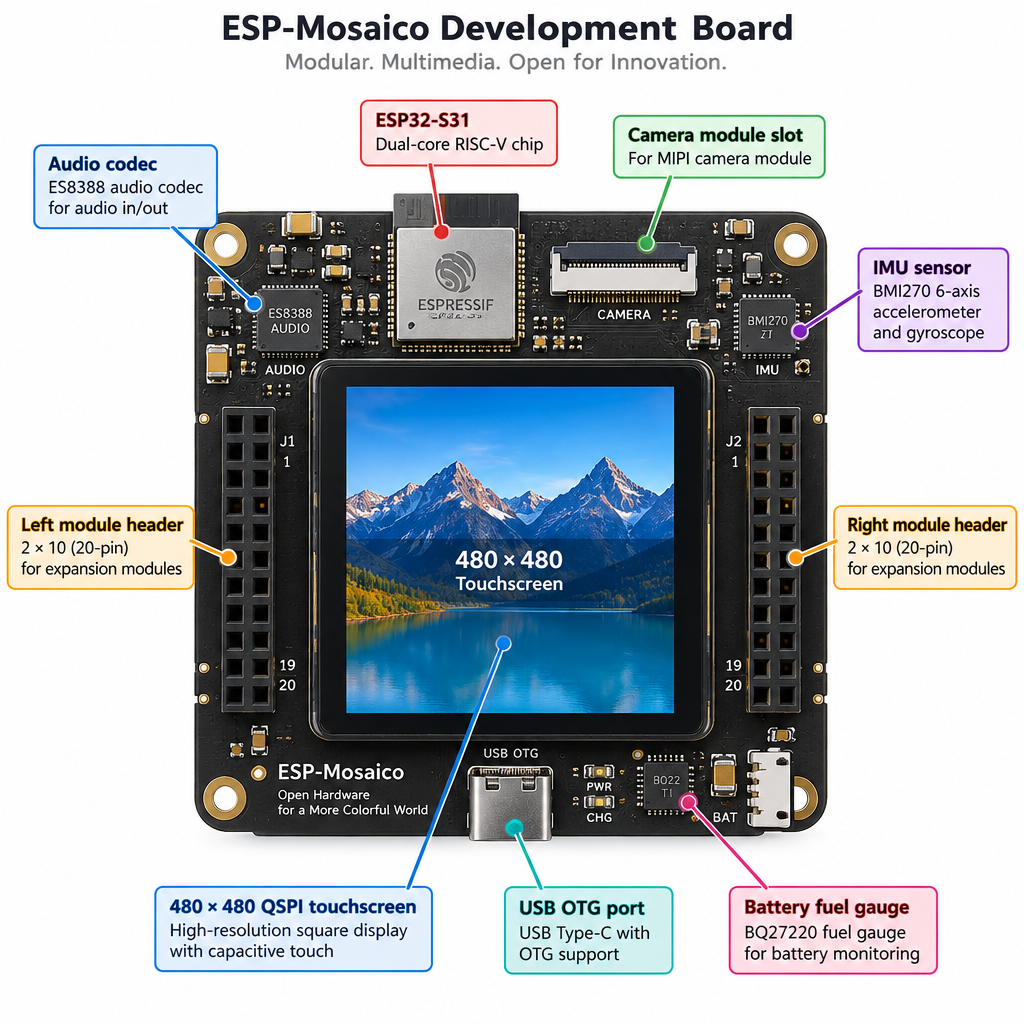
For makers who have been waiting to get hands-on with the ESP32-S31, this is a complete package: a touchscreen, audio in and out, motion sensing, a battery fuel gauge and plenty of PSRAM and flash on one board. The 2.54 mm headers are a good sign for anyone hoping to wire up their own modules, though Espressif has not said how third-party hardware fits into auto-detection.
You do not have to buy into the AI workflow to use the hardware. Espressif’s board support package covers the main peripherals, so the board should also work as a conventional S31 dev platform.
One buying tip: CNX Software reports the board was sold on Taobao and third-party AliExpress stores at inflated prices for a couple of months before the official launch. If you already bought one that way, check the CoreBoard silkscreen to see whether you have V1.0 or V1.2, since Espressif’s documentation covers both.
Follow every development in one place on our board release tracker.