By Wren Calloway Fact-checked by Hugo Lindgren Published
CONFIRMED
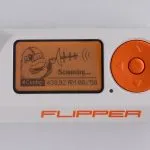
Flipper Devices has launched its Flipper One crowdfunding campaign on Kickstarter, with a base reward of $399 before shipping, CNX Software reports. The portable Arm Linux computer and networking multi-tool is built around a Rockchip RK3576 with a 6 TOPS NPU and 8 GB of LPDDR5. According to Adafruit’s post on the campaign, shipping is planned for July 2027.
What we know
The pricing is clear. CNX Software lists the base Flipper One reward at $399, with shipping charged separately. If you want radio or cellular hardware in the box, the module bundles step up from there:
- $439 with the LoRa module
- $539 with the SDR module
- $599 with the 5G module
- $759 with all modules
Demand came in fast. CNX Software reported that the campaign had passed roughly $10 million from about 19,000 backers around 12 hours after launch. Treat that as a snapshot. Crowdfunding totals move every hour, and the live number on the campaign page will be different by the time you read this.
On timing, Adafruit’s post on the campaign lists shipping as planned for July 2027. That is a long runway from a November 2026 launch, so backers are signing up for a wait of more than half a year at minimum.
The core hardware, per CNX Software’s original coverage of the announcement, is a Rockchip RK3576 SoC with a 6 TOPS NPU and 8 GB of LPDDR5 RAM. A Raspberry Pi RP2350B is listed as a co-processor alongside the main chip. That pairing of a Linux-class application processor with a Raspberry Pi microcontroller is the detail that caught my eye as a maker.
The software story matters just as much. CNX Software reports that Collabora is working with Flipper Devices on mainline Linux kernel support for the RK3576, and that the company is aiming for no binary blobs. For anyone who has fought a vendor BSP kernel frozen on an old release, that goal is a big deal.
Some context on how we got here. Flipper Devices first announced Flipper One on May 21, 2026, describing it as an open Linux multi-tool. The company said at the time that it is not a successor to the Flipper Zero. The target price reported then was about $350, and Flipper Devices warned that volatile LPDDR5 memory costs could push it higher. The final campaign price of $399 shows that warning played out.
What we don’t know yet
The full spec sheet is still not nailed down publicly. Flipper’s own product page lists the full tech specs as “Coming soon.” The device has been described as having Wi-Fi 6E, Gigabit Ethernet and M.2 expansion for modules such as 5G, but check the exact specs on the Kickstarter page before you back it. I would not lock in a project plan around a port or interface until it appears in a final spec table.
Software maturity is the other open question. Earlier coverage said several key pieces were still in development, including:
- Power management
- USB DisplayPort Alt Mode
- NPU drivers
- Hardware video acceleration
None of the facts available to us say those are finished. Power management is critical on a battery handheld, and the NPU drivers decide whether that 6 TOPS figure is usable or just a number on a slide.
We also don’t know how the July 2027 shipping plan will hold up. No final ship date beyond that plan has been given, and crowdfunded hardware schedules are only as good as the supply chain behind them, especially with memory pricing already shown to be volatile.
What it means
For networking work, the pitch is obvious: a pocket Linux box with fast wireless, wired Ethernet and optional LoRa, SDR or 5G modules. The more interesting question for this site is whether it earns a place on a maker bench beyond that.
On paper, there is a case. Eight gigabytes of LPDDR5 is comfortable headroom for a full Linux userland, containers, or a local toolchain. A 6 TOPS NPU points at on-device vision or audio inference, the kind of thing you might want on a robot or a sensor rig. And an RP2350B co-processor next to the main SoC suggests a split many of us already build by hand: Linux for networking and heavy lifting, a microcontroller for timing-sensitive I/O. How Flipper Devices actually exposes that co-processor to users is something to confirm once full specs land.
The caveat is that the maker value depends heavily on software that earlier coverage says is unfinished. If NPU drivers are not ready, the NPU is dead silicon for your project. If power management lags, battery life suffers. The Collabora mainline kernel effort and the no-blobs goal are reasons for optimism about the long term, since mainline support is what keeps a board useful years after launch. But “aiming for” is not “shipped.”
Price is the other filter. At $399 plus shipping, and $759 for the full module set, this is well above a single-board computer plus a microcontroller dev board. You are paying for integration, a handheld form factor and the module ecosystem. If those matter to you, the value is there. If you mainly want Linux and GPIO on a bench, cheaper routes exist.
My take: back it if you want a networking-first handheld and are comfortable waiting until at least July 2027 for a device whose software is still maturing. If you are mainly after a maker or robotics platform, wait for the final spec table and real reviews of the NPU and co-processor support before committing.
Follow every development in one place on our board release tracker.
Notes on this article
- Fact-checked by Hugo Lindgren before publication.
- Published
Fact-checking
- Every claim is checked by Hugo Lindgren; anything we cannot confirm is corrected, labelled or removed.