BUILD
What it is
Computer Science & Engineering students at East Point College of Engineering & Technology (EPCET) in Bengaluru built a small vehicle-to-vehicle (V2V) warning system. It runs on two prototype vehicles. When the lead vehicle detects a hazard, it shows a warning on its own screen and radios the alert to the vehicle behind it, with the aim of preventing chain collisions. Business News Week carried the college’s press release about the project on October 24, 2026. The students’ own write-up, an abstract on Zenodo, was published before that coverage.
How it works
Everything below comes from the makers’ Zenodo abstract, IoT-Based Vehicle-to-Vehicle Communication for Chain Collision Prevention.
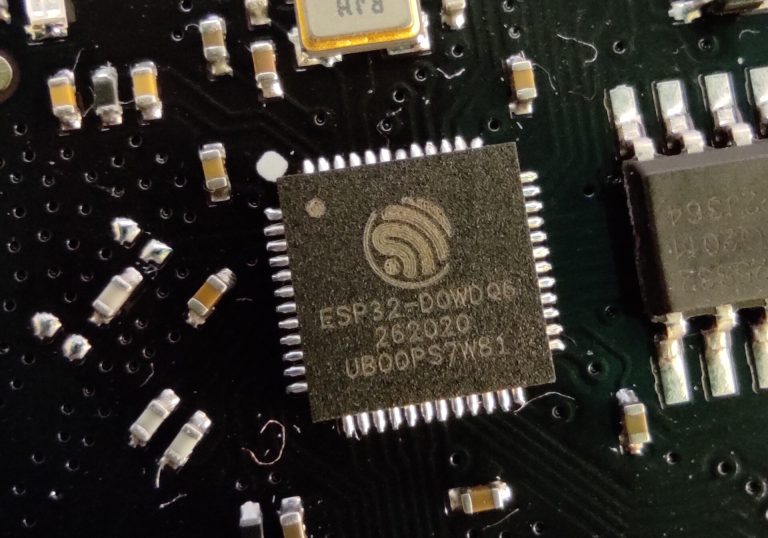
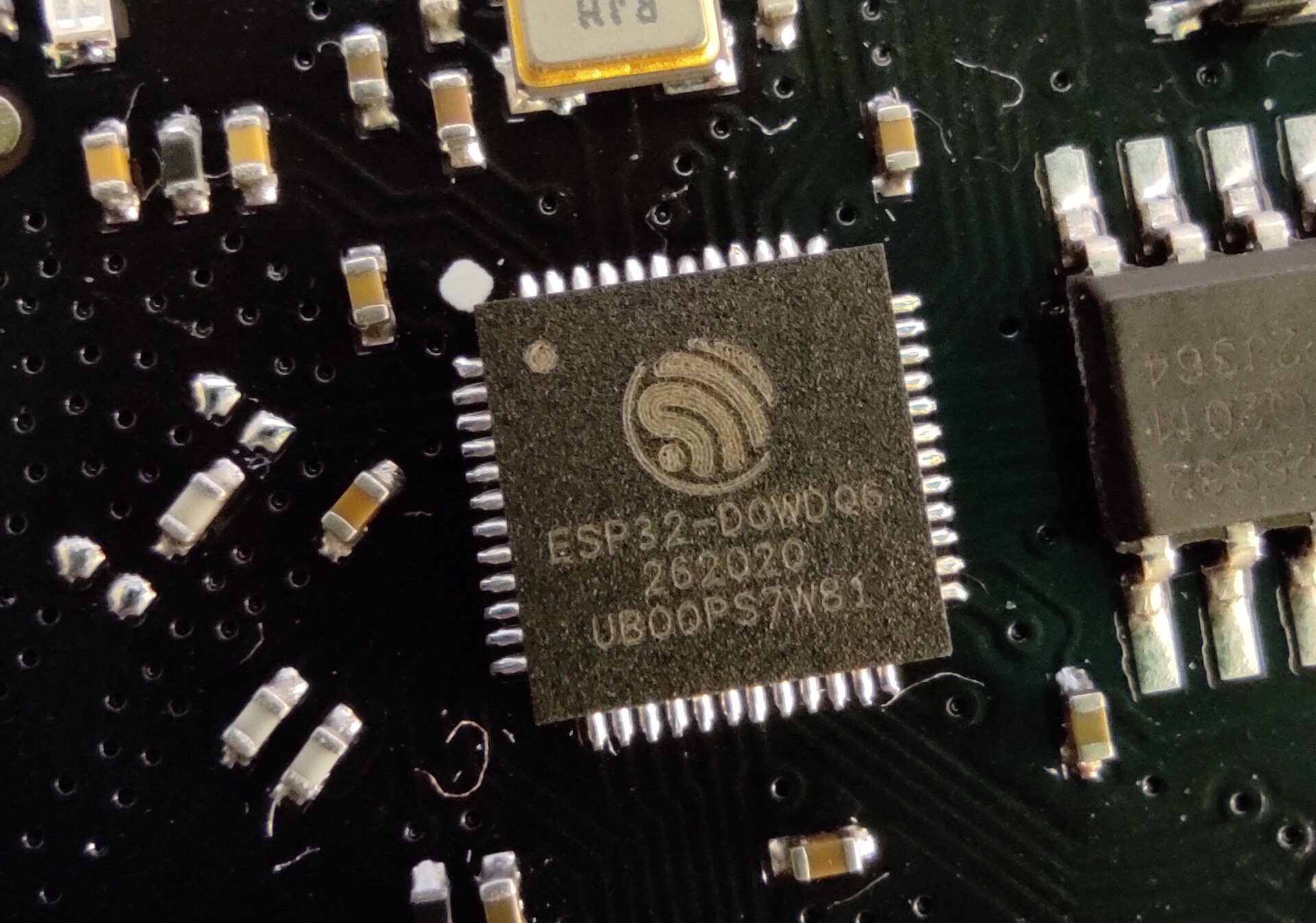
Boards. Each of the two vehicles has an ESP32 microcontroller.
Vehicle-to-vehicle link. The vehicles talk to each other over RF. The abstract does not name the RF module or protocol.
Sensors and what they do:
- Ultrasonic sensor (lead vehicle). Measures the distance to obstacles ahead. When an obstacle is closer than 30 m, a warning appears on the lead vehicle’s LCD and is sent to the second vehicle over RF.
- LDR module. Detects the light intensity of oncoming headlights (high beam vs. low beam) and raises glare-based alerts.
- Accelerometer (both vehicles). Detects tilt or sudden impact. A collision is reported to the trailing vehicle’s LCD.
- GPS module (first vehicle). Sends live accident coordinates to a Telegram bot.
- Alcohol sensor. Triggers a Telegram alert and sends a hazard notification to the second vehicle.
Outputs. Warnings appear on the vehicles’ LCDs. GPS location and alcohol alerts go out through Telegram. The press release describes the system the same way: alerts on the vehicle LCDs, with location shared through Telegram.
Motors and drive. The abstract does not describe the vehicles’ chassis, motors or motor drivers.
Code. No firmware or code has been published. Nothing in the write-up explains how the ESP32s handle the RF messages or the Telegram bot integration.
How well it works. The abstract and the press release say what the system is designed to do. Neither one includes test results, range measurements or reliability figures. We also found no independent hands-on testing. Coverage of the October 2026 announcement appears to be syndicated copies of the same press release (Business News Week, Tripura Star News, WebNewsWire).
Parts list
The makers have not published a bill of materials or a cost figure. Rather than guess at prices, we’ve marked them as not stated. Specific module models are not given either.
| Part | Role | Rough price |
|---|---|---|
| ESP32 microcontroller (×2, one per vehicle) | Main controller on each vehicle | Not stated by makers |
| Ultrasonic distance sensor (lead vehicle) | Detects obstacles ahead | Not stated by makers |
| LDR module | Detects headlight glare from oncoming traffic | Not stated by makers |
| Accelerometer (×2, one per vehicle) | Detects tilt or sudden impact | Not stated by makers |
| GPS module (first vehicle) | Sends accident coordinates to Telegram | Not stated by makers |
| Alcohol sensor | Raises alcohol alerts via Telegram and RF | Not stated by makers |
| LCD display (per vehicle) | Shows warnings to the driver | Not stated by makers |
| RF communication modules | Carry alerts between vehicles | Not stated by makers |
| Prototype vehicle chassis (×2) | Carries the electronics | Not described |
How to build your own
Difficulty. The makers don’t rate it. Based on the parts list, it looks like a beginner-to-intermediate student build. That is our read, not theirs.
Time. Not stated by the makers.
Skills you’ll want:
- Programming the ESP32 (Arduino IDE or similar)
- Wiring and reading common sensor modules
- Driving a small LCD
- Getting two boards to talk over an RF link
- Sending messages to a Telegram bot from an ESP32, which needs a network connection
Steps at a high level. There is no published code to follow, so you’ll be writing your own firmware.
- Get one ESP32 reading the ultrasonic sensor and printing a warning on an LCD when an obstacle crosses your chosen threshold.
- Add the RF link and send that warning to a second ESP32 with its own LCD.
- Add an accelerometer to each vehicle and send a collision alert to the trailing vehicle when you detect a sudden jolt or tilt.
- Add the LDR and decide what light level counts as a high-beam glare alert.
- Connect the GPS module and send coordinates to a Telegram bot when a collision is detected.
- Add the alcohol sensor and send its alert both to Telegram and over RF to the second vehicle.
- Mount everything on two small vehicles and test each alert path on its own before running them together.
If you want a reference point, similar student designs are documented elsewhere:
- A 2024 SCITEPRESS paper on a chain-accident prevention system using Arduino UNO, Zigbee and an ESP32 Telegram hub: https://www.scitepress.org/Papers/2024/136525/136525.pdf
- A write-up on ESP32 V2V braking alerts using ESP-NOW: https://www.academia.edu/128837158/V2V_COMMUNICATION_using_esp32_to_prevent_rear_end_collision
This is a well-trodden project idea. That’s good news if you’re building one.
What we would change
- Publish the code and parts list. A repo with the firmware, wiring diagram and exact module models would make this reproducible. Right now the abstract is the only documentation.
- Name the RF module. “RF communication” could mean several different radios, each with very different range and reliability.
- Check the 30 m threshold. The abstract gives 30 m as the warning distance. The most common hobby ultrasonic sensor, the HC-SR04, is rated for up to 4 metres, so it’s worth confirming what sensor and distance were actually used.
- Consider ESP-NOW. Both vehicles already run ESP32s, and ESP-NOW lets them message each other directly without extra radio hardware. That could simplify the build, as the ESP-NOW paper above shows.
- Explain the Telegram connection. Sending alerts to Telegram needs internet access. The write-up doesn’t say how the moving vehicle stays connected.
- Share test results. Even simple numbers would show how well the system works in practice: alert delay, link range, and false-alarm rates for the LDR and accelerometer.
Credit
This build is the work of Mrs. Kanchana R., Akshithakrishna, Gali Yaswanth Sinha, Janhavi K and S. Lekhana Priya of the Department of Computer Science & Engineering, East Point College of Engineering and Technology, Bengaluru. Artoo Maker Lab did not build or test it.
The original write-up, IoT-Based Vehicle-to-Vehicle Communication for Chain Collision Prevention, is on Zenodo. The October 24, 2026 announcement is the college’s own press release, as carried by Business News Week.